
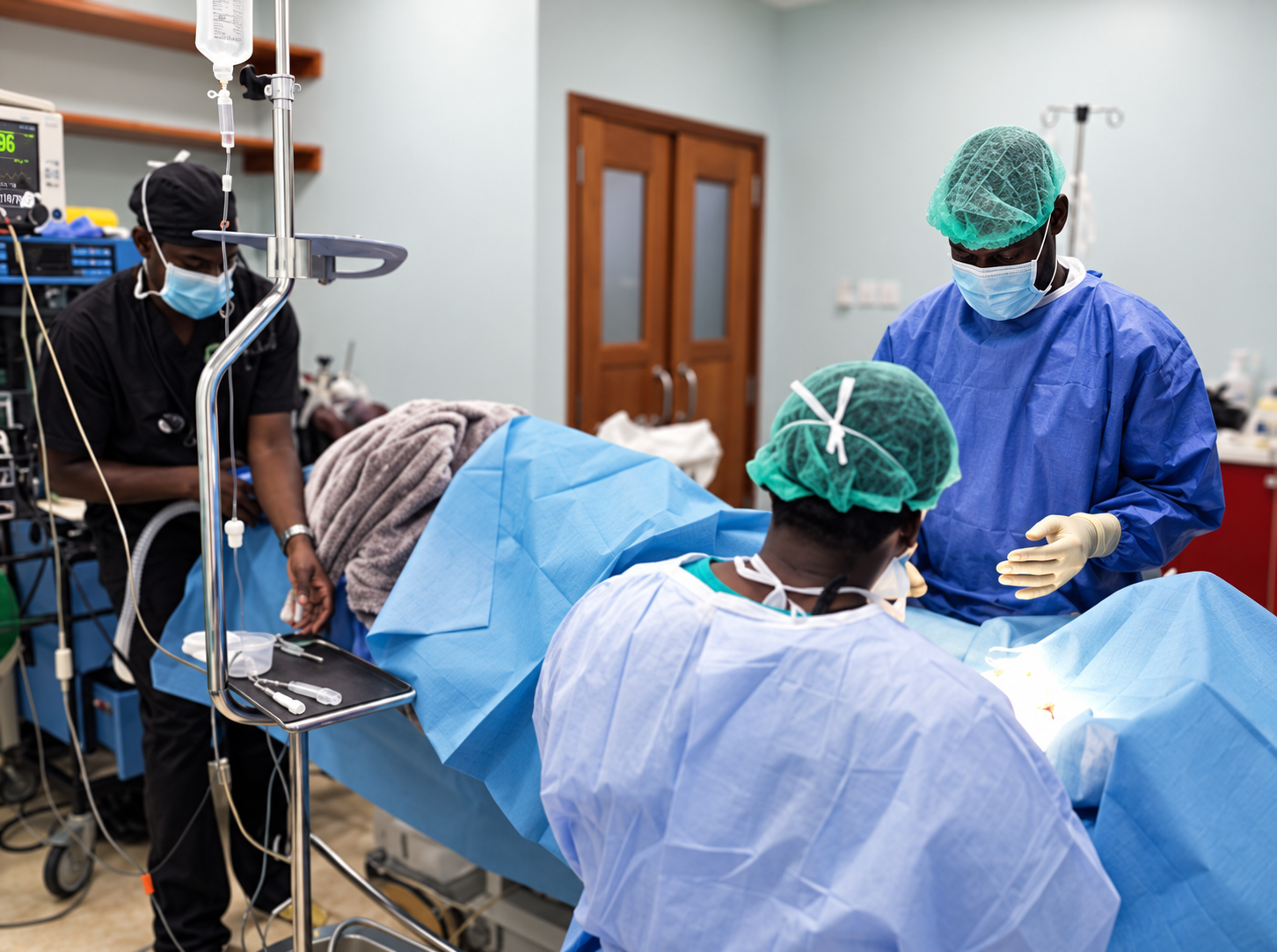
Surgeons perform both open and minimally invasive (laparoscopic) procedures using modern operating theatres equipped with advanced anesthesia systems, imaging support, and sterile environments. Common surgeries include appendectomy, hernia repair, gallbladder removal, bowel surgery, breast lump excision, thyroid surgery, and management of trauma injuries.
Patients receive full perioperative support—from pre‑surgical assessment and counseling to postoperative monitoring and rehabilitation. The team includes surgeons, anesthetists, theatre nurses, and recovery specialists who work together to ensure safe, effective, and compassionate care.
The department also collaborates with radiology, laboratory, and internal medicine units for accurate diagnosis and coordinated treatment planning.
• Patients with abdominal pain or suspected surgical conditions.
• Individuals with hernias, gallstones, or appendicitis.
• Patients requiring removal of lumps, cysts, or tumors.
• Individuals with thyroid or breast conditions needing surgical evaluation.
• Trauma patients requiring operative management.
• Patients needing elective or emergency surgical procedures.
• Individuals requiring postoperative follow‑up and wound care.
• Thorough evaluation and clear explanation of surgical options.
• Safe anesthesia and pain‑controlled procedures.
• Modern operating theatres with advanced equipment.
• Skilled surgeons and attentive nursing care.
• Close monitoring before, during, and after surgery.
• Guidance on wound care, medication, and recovery.
• Compassionate support throughout the surgical journey.
Patients should:
• Attend pre‑operative assessment and share full medical history.
• Follow fasting instructions before surgery.
• Inform the team about allergies, medications, or chronic conditions.
• Arrange for a caregiver or transport after surgery.
• Avoid eating or drinking unless advised.
• Follow all postoperative instructions for wound care and medication.
• Attend scheduled follow‑up appointments for proper recovery.